What is straight neck? Tips to prevent neck and shoulder stiffness caused by "smartphone neck".
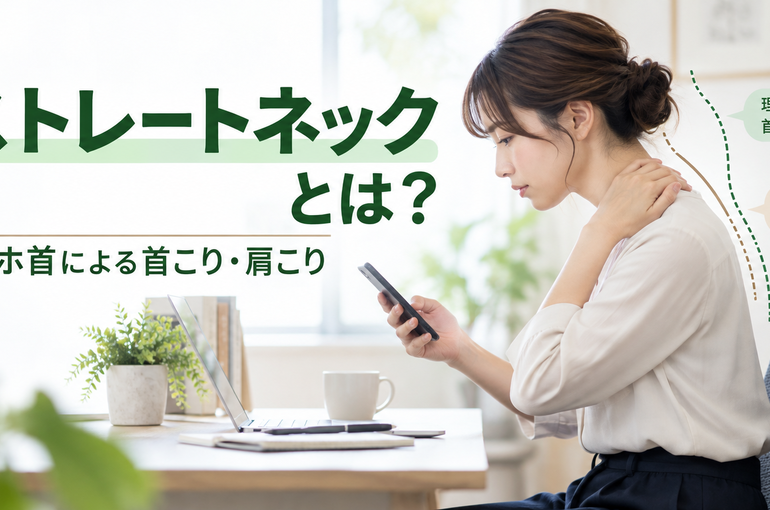
What is straight neck? Tips to prevent neck and shoulder stiffness caused by "smartphone neck".
Hello.
This is Re・Set, a chiropractic salon in Hashimoto, Midori Ward, Sagamihara City.
As the amount of time spent using smartphones and computers increases,
"My neck and shoulders always feel heavy."
"I was told my neck was sticking out."
"It's hard to look up."
"I might have a straight neck."
I think many people feel that way.
This article will explain the condition known as "straight neck," lifestyle habits that put a strain on the neck and shoulders, and measures you can take at home.
What is a straight neck?
Normally, the bones of the neck curve gently forward when viewed from the side.
Straight neck refers to a condition where this curve becomes smaller, making the neck bones appear relatively straight. It is sometimes called "smartphone neck."
However, having a less pronounced neck curve doesn't necessarily mean you'll experience pain or stiff shoulders.
It's important to consider not only the shape of the neck in the image, but also your usual posture, the movement of your neck and shoulder blades, your work environment, sleep patterns, and exercise habits.
Lifestyle habits that can lead to straight neck
Looking at a smartphone for a long time
When looking at a smartphone, your head tends to lean forward as if you're peering at the screen.
In particular, holding the screen near your stomach or knees forces you to bend your neck downwards significantly, which tends to concentrate strain on your neck and shoulders.
The computer screen is too low or too far away.
When the computer screen is low, the text is small, or your body is far from the screen, you unconsciously lean your face closer.
If your chin juts forward while you're working at your desk, it's possible that not only your neck, but also your back and pelvis are misaligned.
His back is hunched over
Even if you try to correct the position of your head, it will be difficult to straighten your neck if your back remains hunched over.
A general imbalance in posture, such as a backward tilt of the pelvis, a rounded back, and forward-sloping shoulders, can also cause the head to be pushed forward.
Maintaining the same posture for a long period of time
Even if your posture looks good, staying still for long periods of time will tire the muscles in your neck and shoulders.
The important thing is not to maintain one posture perfectly, but to frequently change your posture and move your body.
Symptoms that often appear in the neck and shoulders
If you continue to put strain on your neck, you may experience the following symptoms:
・Neck and shoulder stiffness
- Discomfort when moving the neck
- Stiffness in the back and around the shoulder blades
- Heaviness in the head or headache
Eye strain
・Difficulty raising arms
- My breathing feels shallow.
- Even after sleeping, the fatigue in my neck and shoulders doesn't go away.
These symptoms may not only be caused by a straight neck, but may also be due to a combination of factors such as lack of sleep, eye strain, lack of exercise, and stress.
Let's avoid assuming that the cause is simply "because the neck bones are straight."
Measures you can take at home or at work
1. View your smartphone from a slightly elevated position.
Hold your smartphone as close to your eye level as possible to reduce the amount of time you spend bending your neck deeply.
If your arms get tired, you can support your elbows with your other hand or a cushion to help maintain your posture.
2. Adjust the position of the computer.
Adjust the screen so that the top edge is at eye level or slightly below.
If you're using a laptop, one option is to use a stand to raise the screen, and if possible, use an external keyboard and mouse.
3. Move your body every 30 to 60 minutes.
When sitting for extended periods, try to stand up every 30 to 60 minutes.
Even short changes in posture, such as rotating your shoulders, taking a few steps, or opening your chest, can help reduce strain on your neck and shoulders.
4. Gently tuck your chin.
Stand with your back against the wall and look straight ahead.
Instead of lowering your head, gently tuck your chin back, imagining lengthening the back of your neck, and hold this position for 3-5 seconds.
Perform this approximately 5 times, and stop if you experience pain or numbness.
5. Move your chest and shoulder blades.
Place both hands on the back of your head, and slowly open your elbows outwards while inhaling.
Without arching your lower back too much, perform the exercise about 5 times within a range where you feel a comfortable stretch in front of your chest.
The key is to move your chest and shoulder blades along with your neck, rather than trying to correct your posture using only your neck.
Why massaging only the neck doesn't fix the problem
When you have stiff neck or shoulders, you tend to want to massage only the painful areas more intensely.
However, neck strain can be related to factors such as stiffness in the shoulder blades and rib cage, pelvic tilt, breathing patterns, and how the arms are used.
Even if your neck feels temporarily relieved, if your desk environment and how you use your body don't change, the strain may return to the same area.
Re・Set's approach to straight neck and neck stiffness
At Re・Set chiropractic salon, we don't judge solely on the shape of the neck,
Is your head sticking out?
Can you move your head from side to side?
Are your shoulder blades and thoracic spine moving?
Is your pelvis tilted backward?
Do your ribs move when you breathe?
We will check these factors and then create a treatment plan tailored to your physical condition.
We aim to create a state where strain is less concentrated on the neck by adjusting not only the neck, but also the shoulder blades, back, chest, and pelvis.
If needed, we will also provide you with stretches and posture tips that are easy to continue at home or at work.
If the pain or numbness is severe, please consult a medical professional.
If you experience severe numbness in your arms or hands, decreased grip strength, difficulty moving your hands, difficulty walking, or if your symptoms suddenly worsen, please consult a medical professional.
If you experience severe headaches, fever, nausea, dizziness, or neck pain after an injury, it is important to seek proper medical attention rather than trying to self-treat by massaging or stretching.
If you are experiencing neck and shoulder pain or poor posture due to smartphone use or desk work, please don't hesitate to contact us for advice.
Re・Set Chiropractic Salon, Hashimoto Branch
3-19-17 Hashimoto, Midori-ku, Sagamihara City, Kanagawa Prefecture
Primrose House Rooms 303 and 305
What exactly is a straight neck? Hashimoto's chiropractic salon Re・Set explains its relationship to neck and shoulder stiffness caused by smartphones and desk work, what you can do at home, and what symptoms you should consult a medical professional about.