Why do I still feel tired even after sleeping? The relationship between neck and shoulder tension, breathing, and sleep quality.
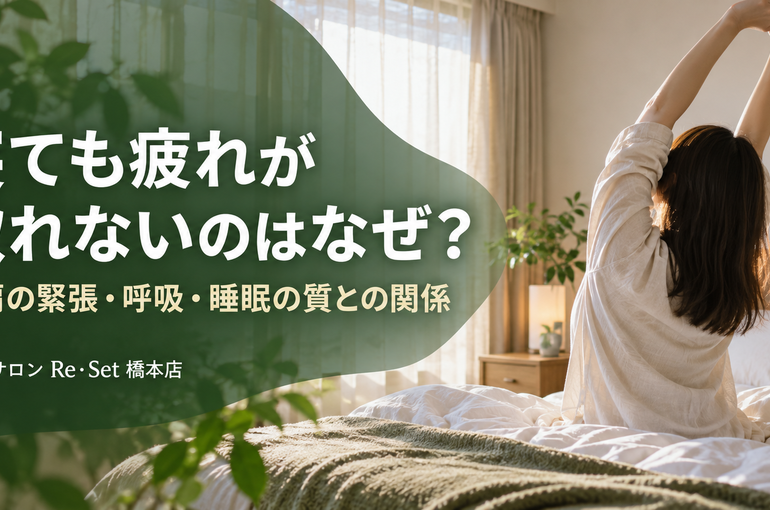
"I slept well, but my body feels heavy this morning..."
"I'm getting enough sleep, but I still feel tired."
"When I wake up in the morning, my neck and shoulders are stiff."
"I wake up several times during the night."
Do you have any of these concerns?
Sleep isn't simply about sleeping for a long time. What's important is not only getting the necessary amount of sleep, but also feeling rested when you wake up.
The Ministry of Health, Labour and Welfare's "Sleep Guidelines for Health Promotion 2023" also recommends that adults should aim for at least 6 hours of sleep, taking into account individual differences, and review their lifestyle and sleep environment to improve their sense of restful sleep.
This time, we'll introduce some points to reconsider when you feel like you're not getting enough rest even after sleeping, including the relationship between neck and shoulder tension and breathing.
Main reasons why you feel tired even after sleeping
1. Not getting enough sleep
Trying to compensate for weekday sleep deprivation solely by sleeping in on weekends can easily disrupt your sleep-wake cycle. First, take a look at your bedtime and wake-up time to see if you're getting enough sleep.
2. You wake up in the middle of the night, or your sleep is interrupted.
Even if you spend a long time in bed, if you wake up many times during the night, it's difficult to feel like you've gotten enough rest. Room temperature, light, sound, bedding, and even alcohol or caffeine before bed can all affect sleep.
3. You keep tensing your neck and shoulders.
People who spend long hours at a desk or using smartphones tend to adopt a posture where their head is jutting forward throughout the day, which can easily cause tension in the muscles around their neck and shoulders.
If you sleep in that position, you may still feel stiffness, heaviness, and fatigue in your neck and shoulders in the morning. The pillow may not be the only cause; it's important to also check your posture and how you use your body during the day.
4. Breathing is shallow.
Prolonged slouching or rounded shoulders can restrict chest movement, leading to shallow breathing. Additionally, stress and overthinking can unconsciously cause rapid breathing and breathing through the shoulders.
If you're someone who works right up until you go to bed, or if your mind doesn't relax even after getting into bed, your mind, as well as your body, may still be in an active state.
5. Pain or discomfort makes it difficult to turn over in bed.
If you experience discomfort in your lower back, shoulders, or hips, you may wake up every time you turn over in your sleep, or tense your body to avoid staying in the same position.
If you experience persistent lower back or shoulder pain upon waking, check not only your bedding but also the movement of your joints and muscle tension.
5 self-care tips to try starting today
1. Try to keep your wake-up time as consistent as possible.
Even on weekends, try not to make too much of a difference from weekdays, and open the curtains in the morning to let in some light. This will help regulate your body clock.
2. Stay away from your smartphone before going to bed.
If you are exposed to bright lights or information right before going to sleep, it becomes difficult to switch off mentally. First, try reducing the amount of time you spend looking at screens starting 30 minutes before bedtime.
3. Shrug your shoulders and relax.
Slowly lift both shoulders while inhaling, then release the tension while exhaling. Aim to do this 3 to 5 times, within a range that does not cause pain.
4. Gently open the chest area.
Sit in a chair and lightly clasp your hands behind your back. Without shrugging your shoulders, stretch the front of your chest comfortably for 20-30 seconds. The key is not to arch your back too much.
5. Exhale slowly.
Inhale naturally through your nose and exhale slowly and steadily through your mouth. Focus on exhaling slowly and without straining, rather than trying to inhale deeply. Stop if you experience difficulty breathing or dizziness.
What can be done with chiropractic treatment?
Osteopathy is not a treatment for sleep disorders such as insomnia. However, it can help create a state where the body can rest more easily by checking tension in the neck, shoulders, and back, posture, movement of the rib cage during breathing, and body movements related to turning over in bed.
At Re・Set Hashimoto, a chiropractic salon, we listen to each individual's concerns and lifestyle habits, and then tailor the treatment plan to their overall physical condition.
"My neck and shoulders have been heavy since this morning."
"My lower back hurts when I turn over in my sleep."
"I'm tired, but I can't relax my body."
If this describes you, please feel free to contact us.
When you need to consult a medical institution
If you have been told you snore loudly or stop breathing during sleep, experience unbearable daytime sleepiness, have prolonged periods of insomnia, or suffer from severe mood swings, you may have underlying sleep apnea or a sleep disorder. Do not rely solely on chiropractic treatment; please consult a medical professional.
summary
When you feel tired even after sleeping, it's important to reflect not only on the amount of sleep you get, but also on whether you woke up during the night, whether you felt rested in the morning, and whether you have tension in your neck and shoulders or shallow breathing.
If you still experience heaviness or stiffness in your body even after adjusting your sleep environment and lifestyle, it's a good idea to have your physical condition checked.
Re・Set Hashimoto, a chiropractic salon, offers customized chiropractic treatments tailored to your body in a calm and relaxing environment with completely private rooms.
If you are experiencing neck and shoulder stiffness, lower back pain, or posture problems in the Hashimoto Station area, please feel free to contact us.
reference
-
Ministry of Health, Labour and Welfare, "Sleep Guidelines for Health Promotion 2023"
-
Ministry of Health, Labour and Welfare Health Information Website: "If you're still tired even after sleeping, you should check this out! Is the quality of your sleep okay?"