What is autumn fatigue? Reasons why you might experience lethargy, stiff shoulders, and loss of appetite.
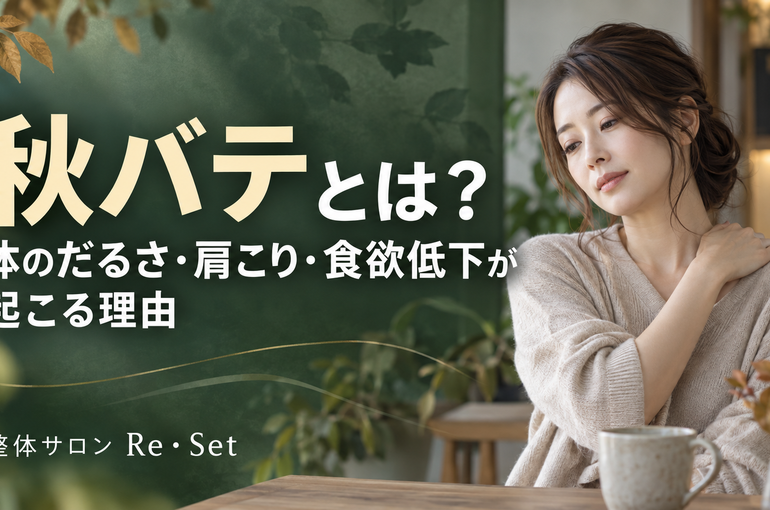
What is autumn fatigue? Reasons why you might experience lethargy, stiff shoulders, and loss of appetite.
Since autumn,
- I feel sluggish and can't shake off the fatigue.
I don't feel refreshed from the morning.
・I'm concerned about stiff shoulders and neck stiffness.
- Loss of appetite
• Light sleep
Are you experiencing any of these symptoms?
These kinds of physical ailments that appear from the end of summer into autumn are commonly known as "autumn fatigue."
Autumn fatigue is not a medical condition.
Autumn fatigue is not an official medical term; it's a general term for discomfort that occurs when fatigue from the summer heat is compounded by changes in temperature, atmospheric pressure, and daily routines.
Typical symptoms include general malaise, fatigue, loss of appetite, and poor sleep quality.
Four reasons why you are prone to autumn fatigue
1. I'm still feeling the fatigue from summer.
During hot weather, the body is under strain in order to regulate its temperature.
A combination of factors such as decreased appetite, lack of sleep, and excessive consumption of cold food and drinks can lead to feeling particularly tired once the weather cools down.
2. Temperature difference between morning/evening and daytime
In autumn, even though it's cool in the mornings and evenings, there are days when it's hot during the day.
To cope with large temperature fluctuations, your body's temperature regulation system repeatedly works, which can make you feel more tired than usual.
It's important to wear a jacket that's easy to put on and take off, and to avoid getting too cold.
3. Disruption of sleep rhythm
If you stay up late at night during the summer or have trouble sleeping due to the heat, your sleep rhythm may not return to normal even when autumn arrives.
The Ministry of Health, Labour and Welfare's "Sleep Guidelines for Health Promotion 2023" recommends that adults aim to get at least six hours of sleep, taking into account individual differences.
Try to keep your wake-up time as consistent as possible and start by getting some sunlight in the morning.
4. Decline in food intake and nutritional balance
If your appetite remains low for an extended period, you may not be getting enough energy and nutrients, which can make you feel even more tired.
When you can't eat a lot at once, try to combine a main dish, side dishes, and staple foods, even if only in small portions.
The relationship between autumn fatigue and stiff shoulders
Shoulder stiffness is not so much the cause of autumn fatigue itself, but rather a ailment that often appears in conjunction with fatigue, lack of sleep, and maintaining the same posture for long periods of time.
Especially when you spend a lot of time at a desk or using a smartphone,
- Your back becomes rounded
- Head juts forward
- Shoulders remain raised
- My breathing feels shallow.
This can lead to a situation where strain is concentrated on the muscles around the neck and shoulders.
Shrugging your shoulders unconsciously when you feel cold can also lead to tension in your neck and shoulders.
Autumn fatigue prevention methods you can do at home
1. Set a consistent wake-up time.
Try not to shift your wake-up time too much, even on weekends. It's a good idea to open the curtains in the morning and let in some natural light.
2. Light physical activity
Start with exercises that are easy to stick with, such as walking or gentle stretching. There's no need to force yourself to do strenuous exercise when you're tired.
3. Exhale slowly.
Inhale easily through your nose, and exhale slowly and steadily through your mouth. When you exhale, be sure to relax your shoulders.
4. Take small amounts of food and fluids.
Even when you don't have an appetite, try to eat small amounts of easily digestible foods while staying hydrated.
Let's also check your posture and body tension.
If you still feel heavy even after resting, it could be due to tension in your neck, shoulders, and back, or from maintaining the same posture for extended periods.
At Re・Set, a chiropractic salon near Hashimoto Station, we provide treatment tailored to your body, not only addressing the painful areas but also checking your posture, shoulder blades, pelvis, and the movement of your rib cage during breathing.
"My shoulders and back are stiff, making it difficult to rest."
"Sitting for long periods of time makes your body feel heavy."
"When I get tired, my posture deteriorates."
If you have any of these concerns, please feel free to contact us.
* "Autumn fatigue" is not an official medical term. If you experience persistent severe fatigue or loss of appetite, or if you have symptoms such as fever, nausea, diarrhea, shortness of breath, or weight loss, please consult a medical professional instead of relying solely on chiropractic treatment.