Typhoon No. 25 is approaching | Why changes in atmospheric pressure can cause headaches, stiff shoulders, and fatigue
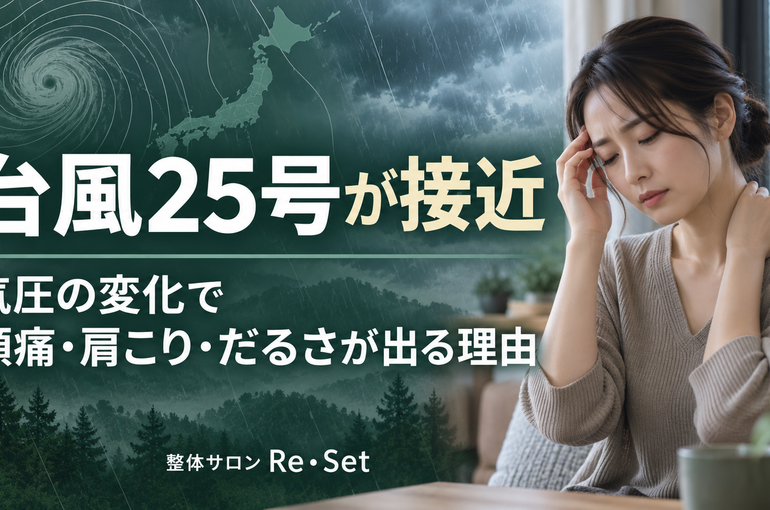
Typhoon No. 25 is approaching | Why changes in atmospheric pressure can cause headaches, stiff shoulders, and fatigue
As a typhoon approaches,
- My head feels heavy, I have a headache.
- My neck and shoulders are stiffer than usual.
I feel lethargic and very sleepy.
- You may experience dizziness or nausea.
- Old injuries or joint pain
Some people experience these kinds of health problems.
Typhoon No. 25 formed in the Mariana Islands at 9 PM on September 16, 2026. As of the morning of September 17, it is a large typhoon and may approach the Ogasawara Islands from the 18th to the 19th, before potentially approaching eastern Japan, including the Kanto region, during the five-day holiday weekend.
However, the typhoon's path and impact may change. Please be sure to check the latest information from the Japan Meteorological Agency and other sources before going out.
Why do I get headaches when a typhoon is approaching?
For some people, changes in weather or atmospheric pressure can trigger migraines or other headaches.
On the other hand, the relationship between atmospheric pressure and headaches varies from person to person, and not all headaches are caused by typhoons.
Before and after a typhoon, not only atmospheric pressure,
Changes in temperature and humidity
・Lack of sleep
- Irregular meal times
• Decreased physical activity
- Stress caused by being unable to go out
These also overlap.
When several of these factors combine, you may be more prone to experiencing headaches and general fatigue than usual.
Reasons why shoulder stiffness and neck heaviness worsen
On rainy days, opportunities to go outside and exercise decrease, and people tend to spend more time indoors looking at their smartphones and computers.
For a long time,
- Head juts forward
- Your back becomes rounded
- Shoulders remain raised
- The same posture continues
When this happens, the strain becomes concentrated on the muscles around the neck and shoulders.
Additionally, physical discomfort or anxiety about the weather can cause tension in the body, resulting in a hunched posture and shallow, rapid breathing.
It's important not to assume that atmospheric pressure is the sole cause, but to also review your posture, sleep, diet, hydration, and activity level.
Health management tips before a typhoon approaches
1. Ensure you get enough sleep.
Try to maintain your usual sleep schedule and wake-up time as much as possible.
2. Do not skip meals or fluids.
Even on rainy, cooler days, remember to stay hydrated. Since hunger and irregular meal times can trigger headaches for some, eat within reasonable limits.
3. Gently move your neck and shoulders.
Rotate your shoulders and gently bring your shoulder blades together within a pain-free range. Avoid forcefully rotating your neck or stretching it with momentum.
4. Exhale slowly and deeply.
Inhale easily through your nose and exhale slowly through your mouth. Try to relax your shoulders as you exhale.
5. Record your symptoms.
Recording the time of your headache, the weather, your sleep duration, meals, and posture can help you identify patterns that tend to occur in your headaches.
During a typhoon, please prioritize your safety above all else.
There's no need to force yourself to go to a chiropractor when it's raining or windy.
Please check warnings and public transport conditions, and refrain from going out if you feel it is unsafe. If you need to change your reservation, please contact us as soon as possible.
Points to keep in mind when you have a headache
In the following cases, please do not assume it is "due to atmospheric pressure" or "due to stiff shoulders," but consult a medical professional.
- A sudden, unusually severe headache.
- Numbness or weakness in the hands and feet.
- Difficulty speaking, altered consciousness
- accompanied by fever and repeated vomiting
- I experienced a headache after falling or hitting my head.
• Headaches that are persistent or repeatedly worsen
If you feel it is an emergency, please call 119 or use the emergency consultation service.
For those in Hashimoto who are concerned about neck and shoulder tension or posture.
At Re・Set, a chiropractic salon near Hashimoto Station, we don't just strongly massage your neck and shoulders; we also check your posture, shoulder blades, pelvis, and chest movement, and tailor our treatment to your individual needs.
Even after the typhoon has passed,
"I still feel heaviness in my neck and shoulders."
"Sitting for long periods of time makes your body stiff."
"My back feels stiff and it's difficult to breathe."
If you continue to experience these symptoms, please feel free to contact us for advice.
*Please note that chiropractic treatment is not intended to diagnose or treat headaches or other illnesses. If you experience severe headaches or unusual symptoms, please prioritize consulting a medical professional over chiropractic treatment.