What causes stiff shoulders? The relationship between posture, shoulder blades, and breathing.
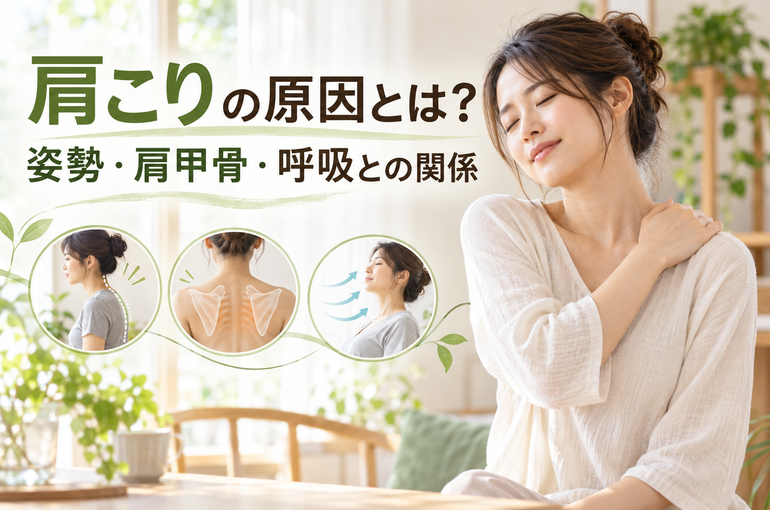
What causes shoulder stiffness to return quickly even after a massage? Hashimoto's chiropractic salon Re・Set explains the relationship between poor posture, rounded shoulders, scapular movement, and breathing.
"Even if I massage my shoulders, they get heavy again right away."
"When I do desk work, my neck and shoulders get really stiff."
"I not only have stiff shoulders, but I also feel heaviness in my head and eye strain."
Are you suffering from shoulder stiffness like this?
Shoulder stiffness isn't always caused simply by the shoulder muscles becoming stiff.
Poor posture, insufficient movement of the shoulder blades, prolonged periods in the same position, and shallow breathing can all be contributing factors.
This time, we will explain the main causes of stiff shoulders and the points that we check in Re・Set.
What is stiff shoulders?
Shoulder stiffness is a condition where you feel "tightness," "heaviness," or "pain" from the base of the neck down to the shoulders and back.
The Japanese Orthopaedic Association lists poor posture such as hunching or leaning forward, maintaining the same posture for long periods, lack of exercise, and mental stress as causes of stiff shoulders. (joa.or.jp)
When shoulder stiffness worsens, it may be accompanied by the following symptoms:
- Difficulty moving the neck
- The inside of my shoulder blades feels heavy.
- I feel like my head is being squeezed.
- My eyes get tired easily.
- It's stiff all the way down my back.
- My neck and shoulders have been heavy since this morning.
If massaging only your shoulders doesn't solve the problem, it's important to check if there are other contributing factors in other parts of your body.
Main causes of stiff shoulders
1. Maintaining the same posture for a long period of time
When you're doing desk work or using a smartphone, you tend to stay in the same posture for long periods of time.
In a posture where the head is jutting forward, the muscles from the neck to the shoulders are constantly supporting the head.
Furthermore, when you extend your arms forward to operate a keyboard or smartphone, your shoulder blades also spread outward, putting strain on the muscles in your shoulders and back.
The Ministry of Health, Labour and Welfare's guidelines for working with information equipment also indicate that the greater the forward tilt of the head, the more likely neck stiffness and pain are to occur. (mhlw.go.jp)
2. You have poor posture, such as a hunched back or rounded shoulders.
When you have poor posture, such as hunching your back or rounded shoulders, your head tends to jut forward and your shoulders tend to roll inward.
In this posture, the muscles on the front of the chest contract, while the muscles around the neck, shoulders, and shoulder blades are stretched.
As a result, only certain muscles continue to work, leading to heaviness and stiffness in the shoulders.
What's important isn't forcing yourself to be proud.
The ideal is to create a state where the pelvis, back, and shoulder blades can move easily, allowing you to maintain good posture naturally without having to exert force.
3. The movement of the shoulder blades is reduced.
The shoulder blades are involved in a variety of movements, such as raising your arms, extending your hands forward, and reaching your hands behind your back.
However, people who spend long periods sitting or who work with their arms extended in front of them tend to have reduced shoulder blade movement.
When you use your arms without sufficient movement of your shoulder blades, the muscles in your neck and shoulders have to work harder to compensate.
Therefore, when examining shoulder stiffness, it is important to consider not only the stiffness of the shoulders,
- Can you raise your arm straight up?
- Can the shoulder blades move up and down, and in and out?
- Is there any difference in movement between the left and right sides?
- Are your thoracic vertebrae and ribs moving?
We will also check these things.
4. Breathing is shallow.
When you're busy or concentrating, do you ever find yourself holding your breath or shrugging your shoulders while breathing?
When you have poor posture, such as hunching or rounded shoulders, which restricts movement around your chest, you tend to use your neck and shoulder muscles more with each breath.
If you continue to breathe in a way that causes your shoulders to rise and fall, the muscles from your neck to your shoulders will have difficulty resting, which can lead to stiff shoulders and fatigue.
If you frequently experience stiff shoulders, check not only your posture, but also whether your ribs and abdomen move naturally when you take a deep breath.
5. Lack of exercise and stress are contributing factors.
If you have fewer opportunities to move your body, the time you spend moving the muscles in your neck, shoulders, and back will also decrease.
Furthermore, prolonged mental tension and stress can unconsciously cause you to tense your shoulders.
If you tend to shrug your shoulders or clench your teeth while working, you may not be spending enough time relaxing your muscles.
Shoulder stiffness should be considered not only in terms of posture, but also in terms of lifestyle habits, work environment, sleep, stress, and other factors.
Self-care tips for relieving stiff shoulders
You don't need to start a lot of exercise at once. Try starting with these two:
1. Slowly move your shoulder blades.
- Place both hands on your shoulders
- Rotate your elbow in a large circular motion.
- Perform 5 forward rotations and 5 backward rotations.
Avoid tensing your neck too much, and focus on the movement of your shoulder blades.
2. Breathing that expands the rib cage
- Sit in a chair and stretch your back slightly.
- Place both hands on your sides.
- Inhale through your nose and expand your rib cage to the sides.
- Exhale slowly through your mouth.
Aim to do this for 5 breaths.
If you experience pain or numbness, do not force yourself to continue.
Re・Set's shoulder stiffness relief treatment
At Re・Set chiropractic salon, we don't just treat the painful area of your shoulder; we assess your current posture and movement patterns before tailoring the treatment plan to your needs.
The main points to check are as follows:
- Pain or asymmetry when moving the neck
- Ease of raising your arms
- Movement of the shoulder blades
- Poor posture such as rounded shoulders
- Pelvic and spinal balance
- Movements of the rib cage and breathing
- Actions that are strenuous in work and daily life
Depending on your physical condition, we will not only loosen the muscles around your neck and shoulders, but also adjust your entire body, including your shoulder blades, back, and pelvis.
If necessary, we will also provide you with one or two types of stretches and exercises that are suited to your current physical condition.
Our approach is to "improve the body's mobility through treatment and maintain that state through daily life and exercise," supporting the creation of a body that is less prone to recurring shoulder stiffness.
Shoulder pain that warrants prioritizing consultation with a doctor.
Shoulder stiffness can sometimes be related to neck and shoulder diseases, nerve problems, blood pressure, or issues in the ophthalmology or otolaryngology fields. joa.or.jp
If you experience any of the following symptoms, do not rely solely on chiropractic treatment; consult a medical professional.
- I have severe numbness in my arms and hands.
- I have difficulty putting strength into my arms.
- I suddenly got a severe headache.
- I have chest pain and shortness of breath.
- Accompanied by fever and severe nausea
- The pain is severe even when at rest.
- Pain after a fall or accident
For those who experience recurring shoulder stiffness
If your shoulder stiffness doesn't go away easily, it might not just be your shoulder muscles, but your posture, shoulder blades, spine, and breathing that are all contributing factors.
At Re・Set, we first assess your current posture and movement patterns, and then tailor the treatment to each individual's condition.
"Even if I massage my shoulders, they go back to normal right away."
"It's not just my neck and shoulders that are hurting, but my head and eyes too."
"I want to learn about self-care that suits me."
If you have any of these concerns, please consult Re・Set, a chiropractic salon near Hashimoto Station.
In a tranquil, private room, we offer customized treatments tailored to your individual physical condition.
猫背や巻き肩になると、頭が前へ出て、肩が内側に入りやすくなります。
この姿勢では、胸の前側の筋肉が縮まり、首・肩・肩甲骨まわりの筋肉は引っ張られた状態になります。
その結果、一部の筋肉だけが働き続けてしまい、肩の重さや張りにつながります。
大切なのは、無理に胸を張ることではありません。
骨盤・背中・肩甲骨が動きやすい状態を作り、力を入れなくても自然に姿勢を保てることが理想です。
3.肩甲骨の動きが小さくなっている
肩甲骨は、腕を上げる、手を前へ伸ばす、背中側へ手を回すなど、さまざまな動作に関係しています。
しかし、長時間座っていることが多い方や、腕を前に出して作業する方は、肩甲骨の動きが小さくなりやすい傾向があります。
肩甲骨が十分に動かない状態で腕を使うと、首や肩の筋肉が代わりに頑張らなければなりません。
そのため、肩こりを見るときは、肩の硬さだけでなく、
- 腕が真上まで上がるか
- 肩甲骨が上下・内外に動くか
- 左右で動きに差がないか
- 胸椎や肋骨が動いているか
なども確認します。
4.呼吸が浅くなっている
忙しいときや集中しているときに、息を止めていたり、肩をすくめながら呼吸していたりすることはありませんか?
猫背や巻き肩で胸まわりが動きにくくなると、呼吸のたびに首や肩の筋肉を使いやすくなります。
肩が上下するような呼吸が続くと、首から肩にかけての筋肉が休みにくくなり、肩こりや疲労感につながることがあります。
肩こりを繰り返している方は、姿勢だけでなく、深呼吸したときに肋骨やお腹が自然に動いているかも確認してみましょう。
5.運動不足やストレスが重なっている
体を動かす機会が少ないと、首・肩・背中の筋肉を動かす時間も減ります。
また、精神的な緊張やストレスが続いていると、無意識に肩へ力が入ることがあります。
仕事中に肩をすくめていたり、歯を食いしばっていたりする方は、筋肉を緩める時間が少なくなっているかもしれません。
肩こりは、姿勢だけでなく、生活習慣や仕事環境、睡眠、ストレスなども含めて考える必要があります。
肩こりにおすすめのセルフケア
たくさんの運動を一度に始める必要はありません。まずは次の2つから始めてみてください。
1.肩甲骨をゆっくり動かす
- 両手を肩に置く
- 肘で大きな円を描くように回す
- 前回し・後ろ回しを各5回行う
首に力を入れすぎず、肩甲骨が動いていることを意識します。
2.肋骨を広げる呼吸
- 椅子に座り、背中を軽く伸ばす
- 両手を脇腹に当てる
- 鼻から息を吸い、肋骨を横へ広げる
- 口からゆっくり息を吐く
5呼吸を目安に行いましょう。
痛みやしびれが出る場合は無理に続けないでください。
Re・Setの肩こり整体
整体サロンRe・Setでは、肩がつらい場所だけを施術するのではなく、現在の姿勢や動きを確認したうえで施術内容を組み立てます。
主に確認するのは、次のようなポイントです。
- 首を動かしたときの痛みや左右差
- 腕の上げやすさ
- 肩甲骨の動き
- 猫背や巻き肩の状態
- 骨盤と背骨のバランス
- 胸郭や呼吸の動き
- 仕事や日常生活で負担がかかる動作
お体の状態に合わせて、首・肩まわりの筋肉をほぐすだけでなく、肩甲骨、背中、骨盤なども含めて全身を調整します。
必要に応じて、現在の体に合ったストレッチや運動も1〜2種類に絞ってお伝えします。
「施術で動きやすい状態に整え、日常生活や運動で維持していく」という考え方で、肩こりを繰り返しにくい体づくりをサポートしています。
病院への相談を優先した方がよい肩こり
肩こりの中には、首や肩の病気、神経、血圧、眼科・耳鼻科領域などが関係している場合もあります。joa.or.jp
次のような症状がある場合は、整体だけで判断せず、医療機関へ相談してください。
- 腕や手に強いしびれがある
- 腕に力が入りにくい
- 急に強い頭痛が出た
- 胸の痛みや息苦しさがある
- 発熱や強い吐き気を伴う
- 安静にしていても痛みが強い
- 転倒や事故のあとから痛む
肩こりを繰り返している方へ
肩こりがなかなか楽にならない場合、肩の筋肉だけではなく、姿勢・肩甲骨・背骨・呼吸などが影響しているかもしれません。
Re・Setでは、最初に現在の姿勢や動きを確認し、一人ひとりの状態に合わせて施術を行います。
「肩を揉んでもすぐ戻ってしまう」
「首や肩だけでなく、頭や目までつらい」
「自分に合ったセルフケアを知りたい」
このようなお悩みがある方は、橋本駅近くの整体サロンRe・Setへご相談ください。
完全個室の落ち着いた空間で、お体の状態に合わせたオーダーメイドの施術をご提案します。